
Looking for fun things to do with the kids?
Explore our kid-friendly directory
- {{ listingType.name }}
- prev
- next
Menu

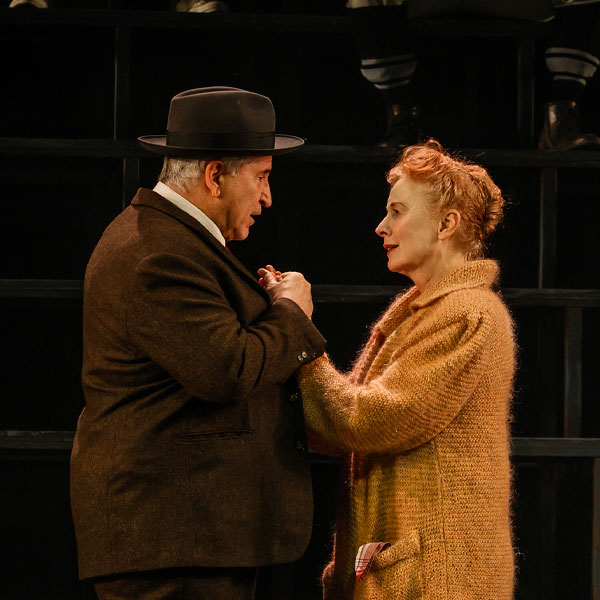
The critically acclaimed production of Death of a Salesman, starring Anthony LaPaglia alongside Alison Whyte, Josh Helman and Ben O’Toole, has returned to Melbourne’s Her Majesty’s Theatre for a limited season until 22 August 2026.
Directed by legendary Australian stage and screen director Neil Armfield, Death of a Salesman explores family, ambition, expectations and the pursuit of the American Dream.
Advertisement
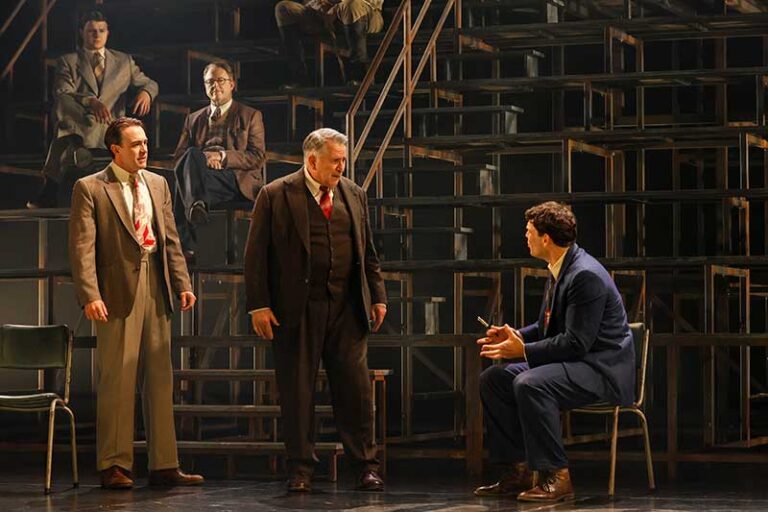
Set against the backdrop of post-war America, Death of a Salesman follows Willy Loman, an ageing travelling salesman who is struggling to accept that the life he has built is no longer what he imagined it would be.
Willy has spent his life believing that being well-liked, successful and financially secure is the key to happiness. But as he gets older, the sales relationships that once made him successful are disappearing. Many of the people he knew have retired or passed away, and his old-fashioned approach to selling is no longer working.
At the same time, his relationships with his two sons, Biff and Happy, are becoming increasingly strained as he struggles to accept the choices they have made and the reality of their lives.
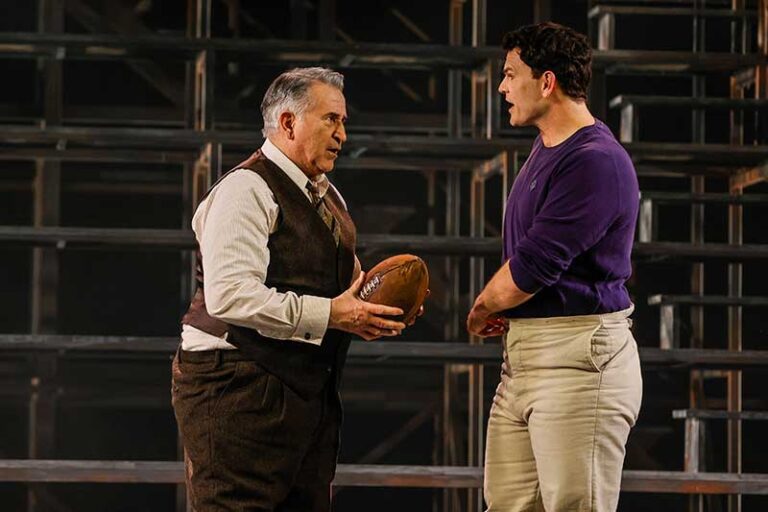
At the centre of the play is the idea of the American Dream, the belief that hard work and determination will lead to success. But Miller turns this idea on its head.
Willy has spent his life chasing success and recognition, but much of what he believes about himself is built on superficial ideas of greatness. His memories repeatedly take him back to a time when he believed he was admired, successful and destined for something more.
The play moves between Willy’s present reality and his memories, blurring the line between what is happening around him and the world he retreats into. While his behaviour can at times appear to reflect cognitive decline, Miller presents Willy’s breakdown as something much deeper, a social and personal tragedy shaped by a world that measures a person’s worth by their financial success, productivity and usefulness. It is an idea that still feels relevant today.
With ongoing cost-of-living pressures, job insecurity, redundancies and rapid changes in the workplace brought about by technology and AI, the pressure to succeed and remain valuable can feel very familiar. The play asks what happens when we begin to measure our worth by what we achieve, rather than by who we are.
Advertisement
While Willy’s professional struggles sit at the centre of the play, it is the relationships within the Loman family that give the story much of its emotion.
Linda (Alison Whyte) is the glue holding the family together. She loves Willy deeply and spends much of her time trying to protect him, defend him and keep him going, even as his behaviour becomes increasingly difficult.
Alison Whyte is brilliant as Linda. She brings a quiet sadness to the character, but also an incredible strength. Linda has endured years of disappointment while continuing to support her husband and sons. Whyte captures both her vulnerability and her determination to keep the family together.
Willy’s relationship with his sons is far more complicated.
Biff (Josh Helman) was once his father’s favourite. A high school football star, he carried all of Willy’s hopes for greatness. Willy sees enormous potential in Biff and spends years believing that his son is destined for success.
But everything changes when Biff discovers his father’s affair. The idealised image he had of his father is shattered, and their relationship never truly recovers.
As an adult, Biff struggles to find his place. Unlike Willy, he doesn’t want to pretend that they are something they are not. Biff wants his father to accept that they are ordinary people and that there is nothing wrong with that.
Josh Helman brings plenty of frustration and emotion to Biff, particularly in the scenes where he desperately tries to break through Willy’s denial.
Happy (Ben O’Toole), meanwhile, has spent his life trying to gain his father’s attention. Although he has a job and his own apartment and appears more conventionally successful, there is a deep emptiness underneath it.
Ben O’Toole captures this side of Happy well, showing a man who appears confident on the surface but is still searching for his father’s approval.
Anthony LaPaglia gives a strong performance as Willy. He portrays a man who is tired, disoriented and increasingly unable to separate his memories from the present, while also capturing Willy’s anger and frustration.
There are moments where you can see just how desperately Willy wants his life to have meant something.
LaPaglia makes Willy difficult to watch at times, but also difficult not to feel sympathy for. You can see the frustration and disappointment building as he struggles to accept that the life he imagined for himself and his family has not turned out as he expected.
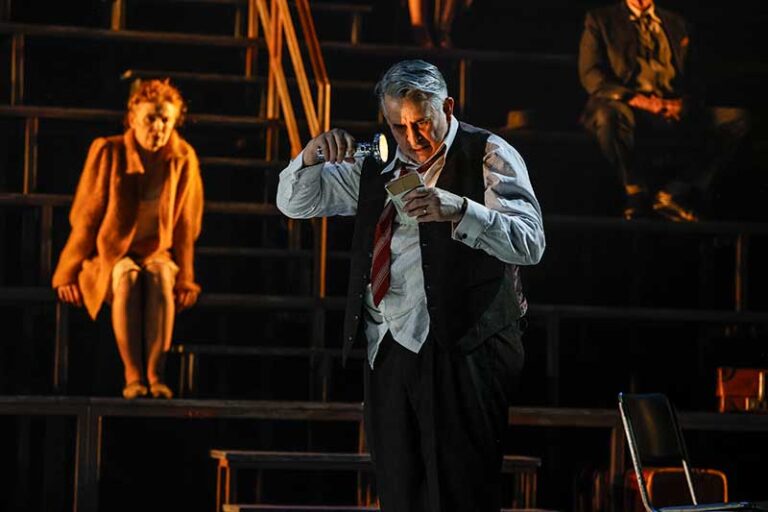
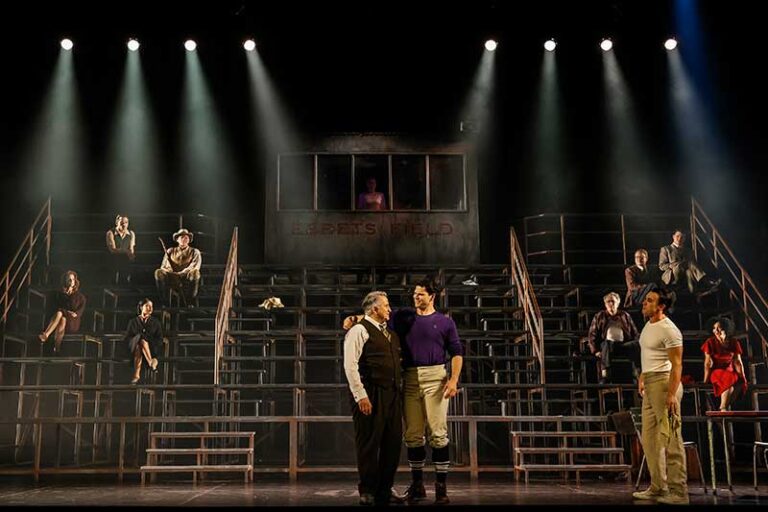
The production uses Ebbets Field as its main setting, rather than a traditional house. Rusted metal bleachers fill the stage, creating the look of a baseball grandstand while also giving Willy a confined space to move around in.
The rest of the cast remain on the bleachers for much of the performance, becoming part of the setting as Willy moves between the present and memories of the past. The set stays in place throughout, with the changes in time coming through the action and performances rather than a change of scenery.
The production also makes clever use of costumes to help distinguish between the present and Willy’s memories, with changes in clothing helping to signal when the story has moved back in time.
Advertisement
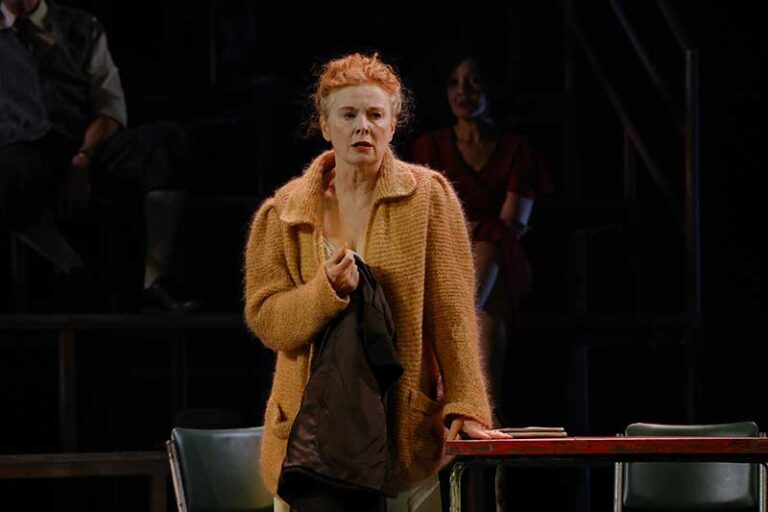
The final part of the play is particularly difficult to watch. Willy ultimately reaches a point where he believes the only thing he can still give his family is the money from his life insurance. His decision to take his own life is devastating, particularly because it comes from his belief that his death will finally make him valuable to his family. And then comes the funeral.
The man who spent his entire life believing that being well-liked was the key to success is confronted with the reality of how few people actually turn up to mourn him. Linda is left behind with the family home and mortgage finally paid off, but at the cost of losing her husband. It leaves you asking: what was it all for?
Death of a Salesman is not an easy night at the theatre, but it is a story that leaves you with plenty to think about. Arthur Miller explores family expectations, regret, identity and self-worth, while showing how the pressure to succeed can affect both individuals and their families.
More than 75 years after it was first performed, many of the themes still feel relevant today. The pressure to succeed, financial stress, changing workplaces and the expectations we place on ourselves and others are all ideas that audiences can still relate to.
I would recommend this production of Death of a Salesman. Anthony LaPaglia and Alison Whyte give standout performances, the set is well designed, and the story offers plenty for audiences to take away. It’s a strong production of a classic play that remains easy to connect with today.
Death of a Salesman is playing at Her Majesty’s Theatre, Melbourne, until 22 August 2026.
Running time: Approximately 2 hours 50 minutes (3 hours 15 minutes, including an interval).
Please note: When you purchase a ticket through this link, Kiddiehood will receive a small commission at no extra cost to you. Your support helps us continue sharing the best events, activities, and experiences for families around Melbourne.
We try our best to provide accurate information on kid-friendly events around Victoria but do recommend parents check details directly to confirm dates, times, prices as some details may be subject to change.
Explore our kid-friendly directory
You must be logged in to post a comment.
